= 50+ BOOKS =
Poetry, Fiction, Nonfiction
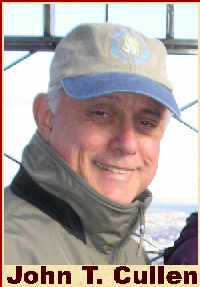 John T. Cullen Anchor Website: Welcome. This website (over twenty years old) is under total revision and heavy construction. Thanks for your patience. More info soon. Image at left: John T. Cullen touring the world (somewhere: Eiffel Tower? Empire State Bldg? Who knows. All in good fun).
Author of Fifty+ Books. First: avid reader all my life, many topics. I wrote poetry over twenty years (ages 7 to 27), published by age 18, over 450 poems available for you to read. I began writing fiction around age 8, finished my first full novel age 19 (Summer Planets available from Amazon, B&N, etc). My first professional writing job began age 17 as a summer intern college student reporter at The New Haven Journal-Courier (three summers). Moved on later to technical writing in aerospace, computer systems development, medical systems, and more. Editor, publisher, novelist, short story writer: over fifty books so far. More author info soon.
Quick Author Info. Academic background: B.A. in Liberal Arts (English, Languages, Classics, History, Comparative Literature), University of Connecticut; a Master's in Business Administration, Boston University earned during U.S. Army service USAREUR in Cold War FRG, Heidelberg Div. MET/BU; and B.B.A. Computer Information Systems, National University. With a strong academic background, I do my best to stay within provable, reliable, logical parameters. No occult, conspiracy, or other baseless notions. As an Ecumenical Christian (Matt.7-12, Levit.19-18, Golden Rule above all) I try to be tolerant of all things except intolerance.
Top Highlights. On the index page, please find links to some of my favorite nonfiction research projects. Since this is my anchor website (in a webplex of linked sites I've built in a quarter century+), I will summarize my main works here. Soon, this information will all be located on this website. For the moment, I am linking satellite sites in my webplex. I will be importing those data soon instead onto this site. More info soon.
More Info Soon. Site is under development. Thanks for your patience.
|
|
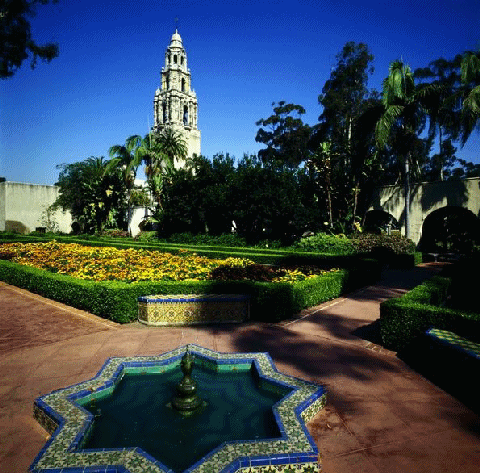
Alcazar Gardens—Balboa Park
San Diego, California, USA
|
|


